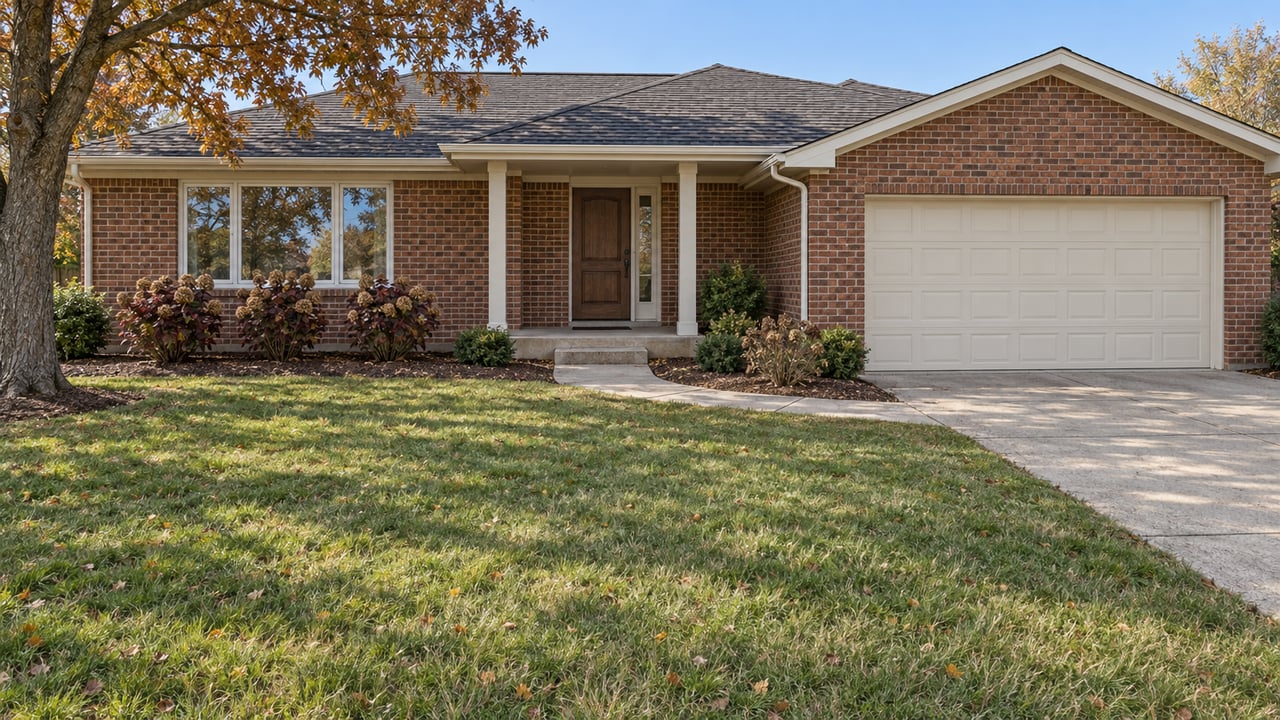
In Clay County, the Tax Bill on the Listing May Belong to the Seller
November 5, 2026
November 5, 2026
This is the stretch of the year when Clay County's property tax bills reach Northland mailboxes. The county Collector's office says bills normally go out by mid-November, and payment is due December 31 whether or not the bill arrives. For 2025, the county approved 17,114 senior applications under its new property tax relief program. Every one of those bills reflects a credit tied to one particular owner.
If you're comparing homes in Liberty, Kearney, Smithville, Gladstone or the KCMO Northland, some of those credited bills will show up in a home's tax history. They tell you what the seller paid. They don't necessarily tell you what you would pay.
Clay County adopted Missouri's optional senior property tax credit, created by Senate Bill 190, in November 2023. 2025 was the first year it took effect. The governing statute, RSMo 137.1050, defines who qualifies before it defines anything about the house:
"Eligible taxpayer", a Missouri resident who: (a) Is sixty-two years of age or older; (b) Is an owner of record of a homestead... and (c) Is liable for the payment of real property taxes on such homestead.
The credit amount is the difference between that taxpayer's bill in a given year and their bill in their "initial credit year." The starting point belongs to the owner. The Excelsior Citizen put it plainly in its explainer: if a home is sold or otherwise changes ownership, the credit does not transfer to the new owner.
| Follows the house | Follows the enrolled owner | |
|---|---|---|
| Assessed market value | Yes | |
| Levies from the county, city, school district and other taxing bodies | Yes | |
| Base-year bill used to calculate the credit | Yes | |
| The credit itself | Yes | |
| Annual renewal requirement | Yes |
What a buyer inherits is the house's value and its levies. The credit and the frozen base year end with the seller. A new owner who later qualifies on their own would get a base year of their own, calculated from their own bill.
For anyone in the program from the start, Clay County calculates the 2025 credit from taxes paid in 2024. Participants have to reapply every year. The county FAQ also lists the events that reset a taxpayer's base year:
The program has also grown since it launched. On January 8, 2026, the Clay County Commission approved an update that brings levies for bonded debt into the program. The county's earlier FAQ had listed those levies as excluded. The State Blind Pension Fund stays outside the program. More of an enrolled owner's bill is now covered than when the program started, so a credited bill can sit further below the uncredited bill on the same house than it did before the update.
Clay County's FAQ explains that state law requires all real property to be reassessed on January 1 of odd-numbered years. Values then carry forward into the even year, except for new construction and improvements. That makes 2027 the next countywide reassessment.
Here's what the last cycle looked like. The county's 2025 annual financial report shows total assessed valuation rising from $6.7 billion in 2024 to $7.5 billion in 2025, a 12% increase across all property types. KCTV5 reported that the county sent about 90,000 increase notices in 2025. Assessor Tracy Baldwin counted roughly 1,200 informal hearings and 700 Board of Equalization hearings that year.
For an enrolled owner, a higher valuation in 2027 mostly turns into a larger credit. The bill they actually pay stays near the base year. For a new owner with no credit, the same higher valuation feeds straight into the bill. So every reassessment can widen the gap between a credited bill in a home's history and what a new owner would owe on that home. The Board of Equalization filing deadline is the second Monday in July.
Missouri has a second rule that keeps these numbers from moving together. The Excelsior Citizen explains that under the Hancock Amendment, cities and schools must roll back tax rates when property values rise faster than inflation, which caps revenue growth at inflation or 5%, whichever is lower. When the county released preliminary senior-program figures for the Excelsior Springs School District and the City of Excelsior Springs, City Manager Molly McGovern told the paper the report "reflects assessed value, not actual tax revenue."
The county commission works from the same arithmetic. On September 23, 2026, it voted 4–2 to set the county's 2026 general levy at 0.0150, a small cut from the prior rate. That is only the county's own levy. A homeowner's total bill also includes the school district, the city and other taxing districts, so a cut at the county level doesn't show what a full bill on a given street will be.
The Clay County Auditor estimates that the senior program means $2 million to $3 million a year less property tax revenue growth across all jurisdictions in the county, and that the amount compounds over time.
There's another reason to treat a credited bill with care. The program's first year took a lot of correction. According to the county, more than 17,000 participant bills had to be created and posted manually. KSHB reported that the county's software couldn't handle the program and that the payment deadline for 2025 bills was extended to January 30.
In a March 16, 2026 memo, the county auditor described an input and levy error affecting 271 senior-program bills in Tax Code Area 11. The memo identified $443,704.16 due to the Smithville School District. That correction doesn't measure how big the credit is. It does show that for 2025, the bill first issued on some credited homes wasn't the final figure.
Buyers sometimes hope that Jefferson City will settle the question before they close. The 2026 legislative session didn't change the rules. MOST Policy Initiative's June 2026 recap found that no bill addressing property tax burden reached final passage. SB 1066 would have clarified eligibility for the SB 190 credit, but the House and Senate versions were never reconciled. The program you'd be buying under is the one described above, including Clay County's January 2026 update.
The statute requires the credit amount to be noted on the statement of tax due that the Collector sends to the enrolled taxpayer. That gives buyers a concrete place to start when two homes look close in price but far apart on taxes:
Clay County residents enrolled for 2026 during the January 1 to March 31 window, so the bills arriving this month will show this year's credits. The Clay County Collector's office can confirm any parcel's figures. This post is general information, not tax, legal or financial advice, so please check your own situation with the county and a qualified tax professional.
When we help buyers compare homes across the Northland, we look at a home's tax history alongside its price, because the two don't always come from the same owner's circumstances. If you'd like help reading the property tax figures on the Clay County homes you're considering, TribeKC Realty can pull the records and go through them with you. Start Your Home Search.
Stay up to date on the latest real estate trends.


We pride ourselves in providing personalized solutions that bring our clients closer to their dream properties and enhance their long-term wealth.